The mechanical contracting industry is facing no shortage of challenges and opportunities, and the Okanagan’s perspective matters.
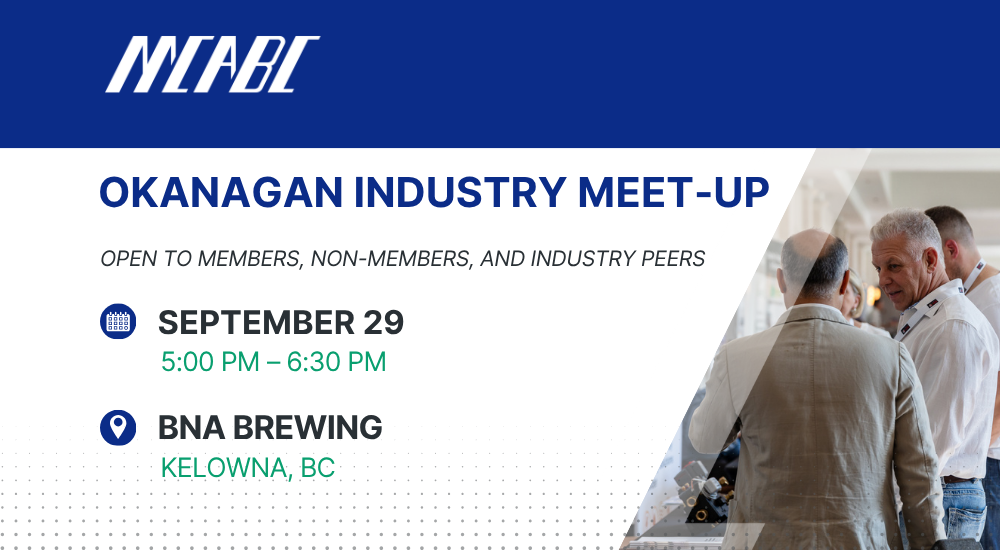
On September 29, members of the MCABC Board of Directors and staff will be in Kelowna for an MCABC Board meeting. We’re inviting local industry stakeholders–both members and non-members–to join us afterward at BNA Brewing for a casual and engaging conversation about the issues affecting your businesses and our industry. Among those in attendance will be MCABC Chair Kyle Wisniewski and Vice Chair Keith Pearce.
This is not a presentation. It’s a conversation.
RSVP to ayuswack@mcabc.org
MCABC wants to hear directly from contractors, suppliers, manufacturers, engineers, and industry partners about what’s keeping you up at night, where you’re seeing opportunities, and where you need support. Whether it’s the impact of tariffs, regulatory changes, workforce challenges, training needs, or emerging technologies, these conversations help shape MCABC‘s priorities and advocacy efforts.
As the voice of B.C.’s mechanical contracting industry, MCABC advocates on your behalf with federal, provincial, and local governments, regulators, and industry partners. The association is actively working on issues such as trade and tariff impacts, the upcoming TSBC QA Manual requirements, workforce development, and reducing barriers to business growth. Hearing directly from industry stakeholders helps ensure our advocacy efforts remain aligned with the realities facing businesses every day.
MCABC also continues to invest in professional development and industry advancement. From its proprietary BIM training program and commissioning education to Medical Gas certification, Project Management training, AI learning opportunities, and leadership development, the association is committed to helping companies build stronger teams and more competitive businesses. Feedback on future training and education priorities is welcomed.
Discussion Topics
Attendees will be encouraged to share their thoughts on:
- What challenges are having the greatest impact on your business?
- Where do you need support from MCABC and government?
- What opportunities should we be advocating for?
- What training, resources, or services would help your team succeed?
- What questions do you have about the federal government’s recently announced Productivity Mega Deduction?
Whether you’re an MCABC member or simply interested in helping shape the future of our industry, you’re invited.
Event Details
Date: Tuesday, September 29
Time: 5:00 PM to 6:30 PM
Location: BNA Brewing (Downstairs), 1250 Ellis Street, Kelowna
Come out for a drink, connect with colleagues, meet members of the MCABC Board and staff, and help us better understand how we can support the success of mechanical contractors throughout the Okanagan.
RSVP: Please contact Alana Yuswack, Office & Events Administrator, at ayuswack@mcabc.org.
About MCABC
The Mechanical Contractors Association of B.C. (MCABC) is the only dedicated representative for the mechanical contracting industry in British Columbia—the industry with the largest share of skilled trades workers in the construction sector. As the connection to industry excellence for our diverse membership, we deliver education and professional development programs that enable high standards of practice and business success. Through advocacy and strong industry partnerships, we influence policy and regulatory development at all levels of government, advancing the interests of our industry and improving its ability to meet B.C.’s growing infrastructure demand.
Media Contact
Conor Brendan Dunne
Manager, Communications & Stakeholder Engagement
cdunne@mcabc.org
(604) 205-5058